

8 June 2026
As part of the Smart Renewable Energy Solutions project, a new test of the Tractor-to-Grid concept is now being initiated, connecting agricultural machinery as active resources in the electricity system. Large electric vehicles could contribute both to farms’ own energy resilience and to greater flexibility in the Swedish electricity grid.
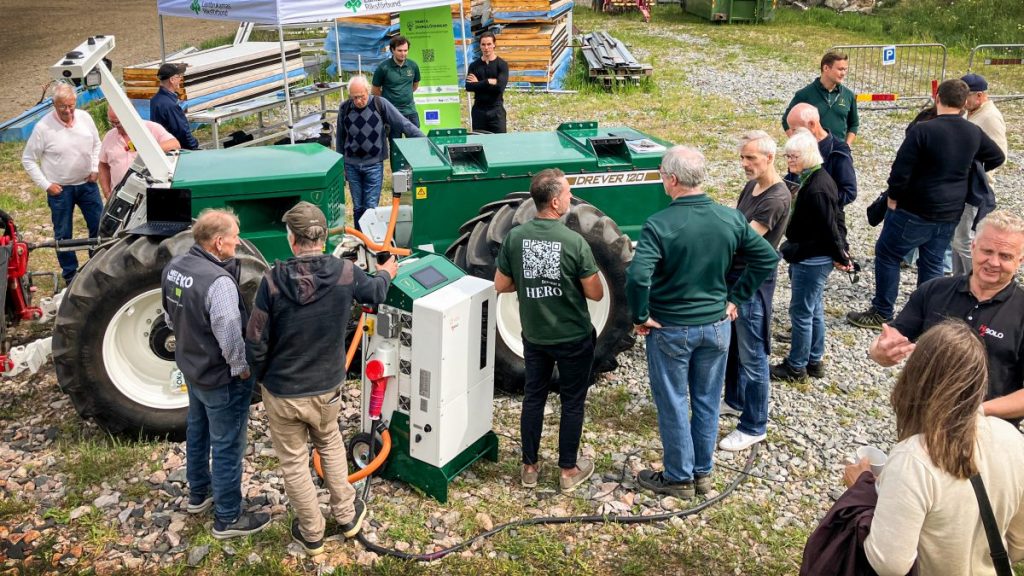
The test will be carried out during the summer of 2026 at Hasta Gård in Arboga, in collaboration with several of Agtech Sweden’s partners: Agro Sörmland, Agro Örebro, Agro Västmanland, Vreta Kluster and LRF. An electric agricultural machine will be integrated with the electricity grid to provide ancillary services and strengthen the farm’s energy resilience.
“We are now seeing bidirectional charging move from pilot projects to real-world implementation on a larger scale, particularly in the passenger car segment. With Tractor-to-Grid, we are bringing the same principle into agriculture and exploring how agricultural machinery can create value both for farmers and for the energy system,” says Kristian Petersson, Agtech Sweden and LRF.
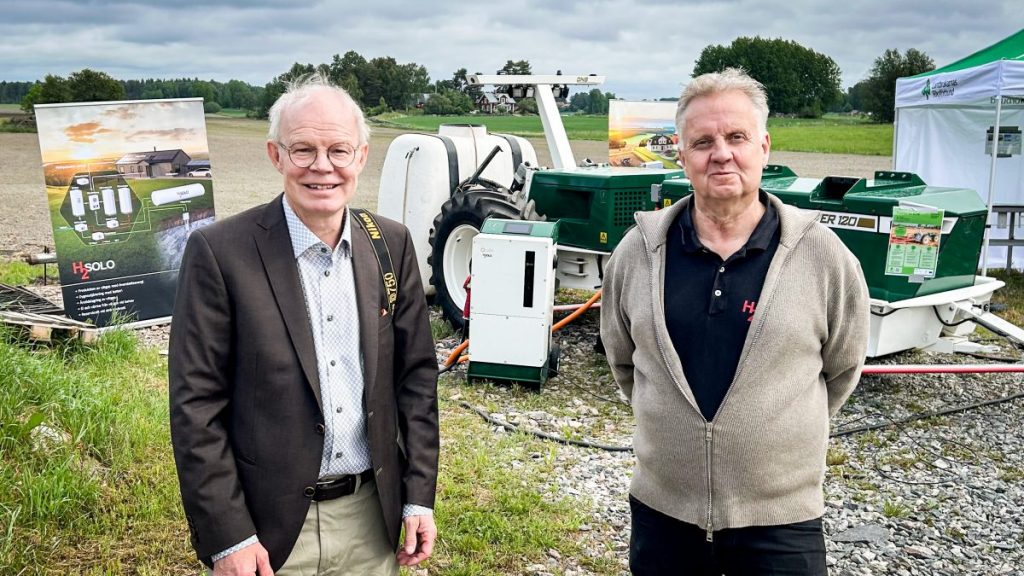
The initiative is part of the Smart Renewable Energy Solutions for Rural Businesses project and is being carried out in collaboration with Traktorarvid, which manufactures autonomous electric tractors, and H2Solo, which works with hydrogen production and energy storage.
Demonstrated at Hasta Gård
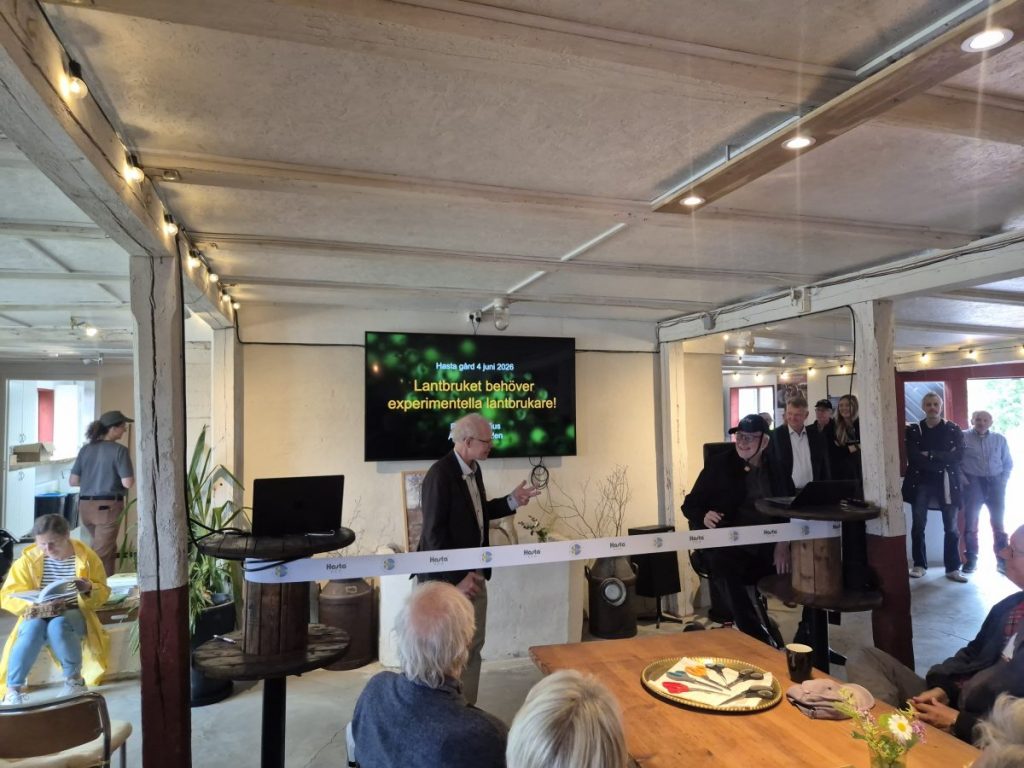
The innovative solution was presented at Hasta-dagen on 4 June, when Hasta Gård invited a range of stakeholders to the launch of its Hasta Eco concept.
The programme included presentations in which external organisations contributed important perspectives. Representatives from KRAV, Agtech Sweden and the Swedish Armed Forces shared insights into sustainability, technological development and preparedness. Per Frankelius, Associate Professor at Linköping University and Chief Initiative Officer Innovation at Agtech Sweden, gave a presentation on the subject.
A clear demonstration
“It was very rewarding to be part of this event. It was also good to see so many of our partners there in person. There was a great deal of interest, and several people stayed behind to continue the discussion after my presentation. Agtech Sweden has an important role in inspiring, sharing knowledge and driving innovation in agriculture forward,” says Per Frankelius.
Hasta-dagen clearly demonstrated the power of collaboration between farming practice, research and industry – and, not least, the role of rural areas in the transition towards a more sustainable energy system.
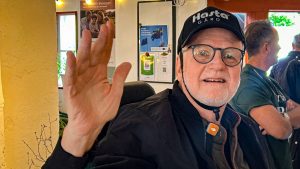
“Hasta Gård and Stefan Schörling are an example of experimental farming, where there is a willingness to invest and to combine deep biological knowledge with an openness to advanced technology. At the same time, there is a focus on food processing and, not least, distribution,” adds Per Frankelius.
Sustainability and preparedness
Ola Albrektsson from Agro Örebro and Niklas Bergman from Agro Västmanland were also present. Both organisations are partners in Agtech Sweden and in the Smart Renewable Energy Solutions for Rural Businesses project.
Ola Albrektsson describes the testbed as a concrete example of how farmers can secure the energy supply for their operations.
“This is about both sustainability and civil preparedness. A farm could become completely independent of diesel and potentially produce and store electricity while also supplying electricity to the Swedish grid,” says Ola Albrektsson.
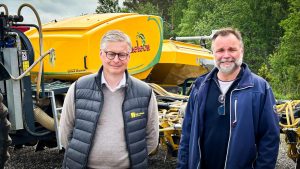
Several other technological concepts were demonstrated during the day. Soil & Seed (formerly Gothia Redskap), for example, presented a modified version of its Cameleon machine.
Contact