

07 September 2026
Instead of treating electricity, fuel and fertiliser as separate elements, farms of the future need to consider them as parts of an integrated energy system. Production, storage and use need to be interconnected.
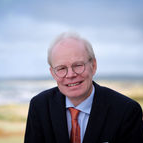
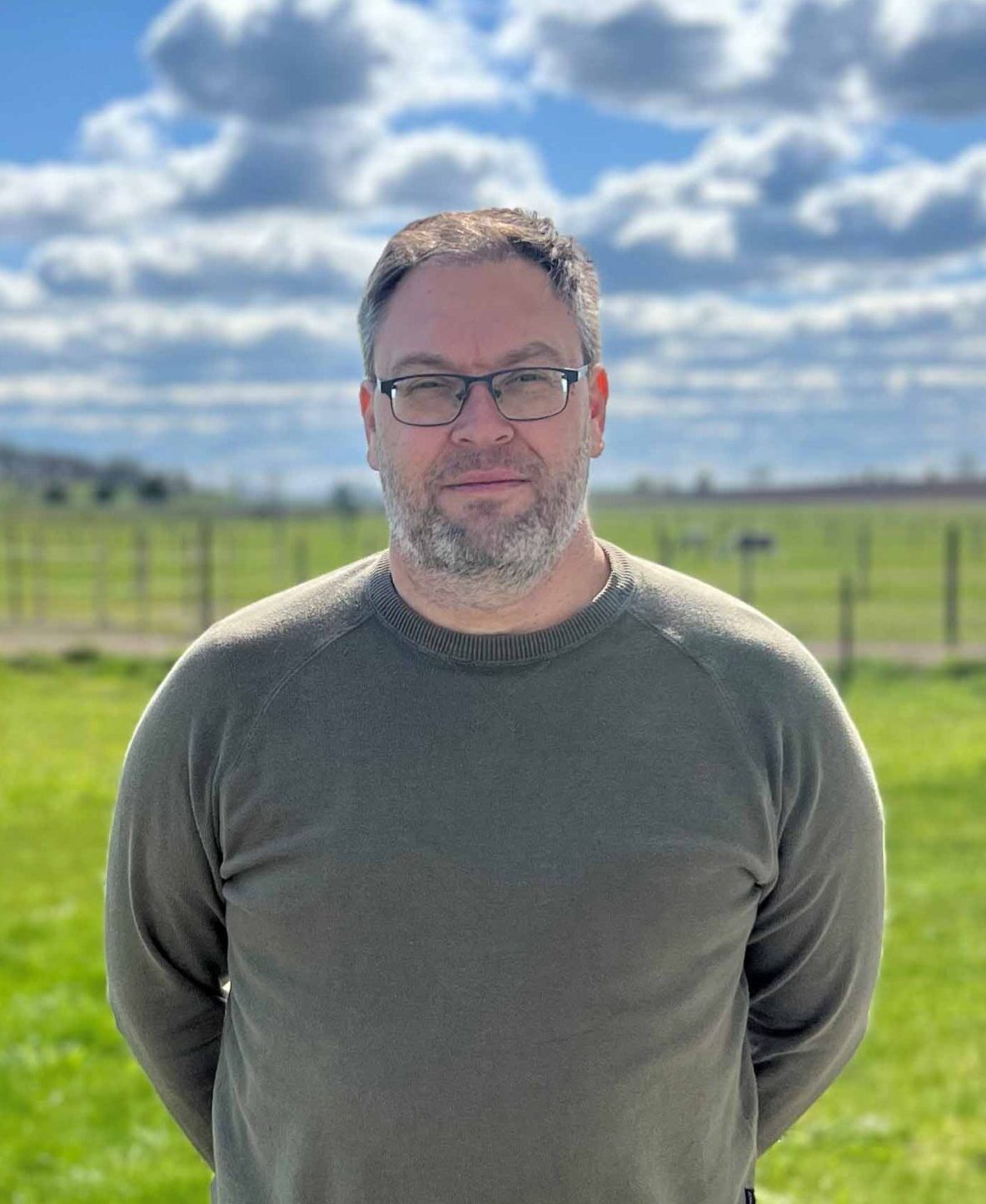
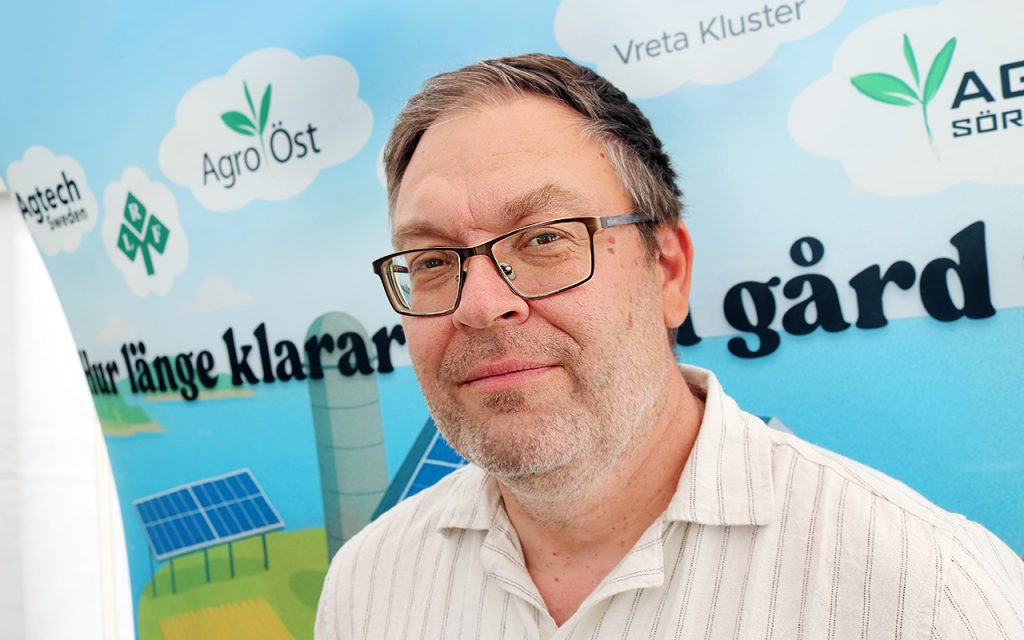
This is the conclusion reached by Kristian Petersson of the Federation of Swedish Farmers, LRF, and Ola Albrektsson of AgroÖrebro. They are project managers for the Smart Renewable Energy Solutions project and presented their conclusions at Brunnby Agricultural Field Days 2026.
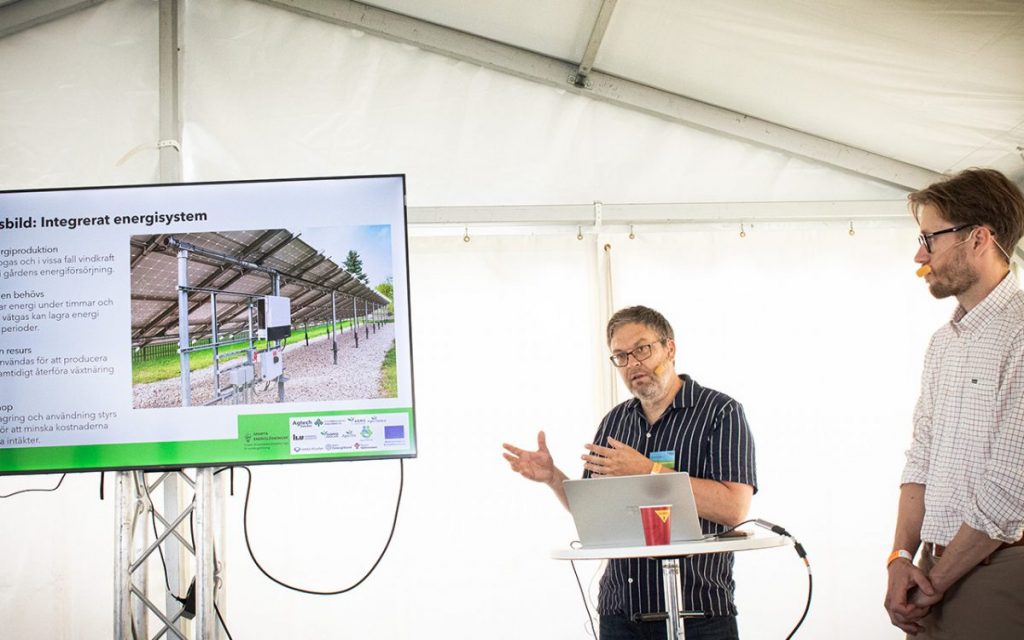
“We have seen a sharp increase in interest in renewable energy and on-farm production. Smart Renewable Energy Solutions is an ambitious initiative. The aim is to increase local energy production among rural businesses in eastern central Sweden and strengthen energy systems at both regional and individual business level,” says Kristian Petersson.
One of the main conclusions is that the energy solutions of the future need to be viewed as an integrated whole.
“One limitation today is that many renewable energy systems still operate independently of one another. This applies whether we are talking about hydrogen, biogas, fossil-free fuels, wind power or solar power,” says Ola Albrektsson.
Self-sufficient energy systems
Historically, farms have purchased diesel and electricity for their own use. However, the trend is moving towards farms being able to produce and manage a large proportion of their own energy.
“The idea is for solar electricity, batteries, biogas, the charging of agricultural machinery and the future production of fuel or fertiliser to work together as a single system. For this to succeed, the different technologies must be able to communicate with one another and be managed in a coordinated way,” says Kristian Petersson.
The project has combined knowledge gathering with practical trials in energy efficiency, digitalisation and data-driven optimisation. Its focus has been on supporting businesses through trials, new models, knowledge building and business development.
Mapping the system leads to better decisions
The transition requires investment. The project team therefore recommends beginning with a detailed assessment of the farm’s energy system.
“Where is energy being consumed? Where can I store and produce energy? What does the infrastructure look like, and which systems can communicate with one another? Answering these questions provides a better basis for decision-making and reduces the risk of investing in the wrong solutions.”
Solar power and storage
Solar panels are already common on Swedish farms, but development is moving towards systems in which several forms of energy work together. Electricity is also becoming a raw material for other forms of energy production, such as hydrogen.
Storage is becoming increasingly important
“When it comes to batteries, the focus is now less on power output and more on how much energy a battery can store,” says Kristian Petersson.
Battery technology is developing rapidly and is becoming increasingly well adapted to Nordic conditions.
“You need to start from your own requirements. How much energy do you need during the night, and how long do you want to be able to operate independently? The battery can then be sized accordingly,” says Ola Albrektsson.
Other promising solutions include water-cooled solar panels that allow the heat to be recovered, as well as thermal energy storage using water or sand.
From the tractor to the electricity grid
Many farms produce more solar electricity than they use during certain parts of the year. New energy storage solutions are therefore being tested.
Together with Traktorarvid, the project is developing a system in which an electric autonomous agricultural machine also serves as an energy storage unit. At Hasta farm, the machine’s battery has been connected to the electricity grid, allowing the stored electricity to be sold when it is not needed on the farm.
Manure as a raw material
When electricity prices are low, it becomes increasingly important to find other uses for surplus electricity.
Biogas is already an established option. Manure is first used to produce biogas, after which the resulting digestate can be used as biofertiliser.
New technology also makes it possible to produce nitrogen fertiliser directly on the farm. Electricity is used to convert nitrogen from the air into compounds that plants can absorb.
“In this way, nitrogen fertiliser can be produced as part of the farm’s own energy production.”
Hydrogen, ammonia and e-fuels
Looking further ahead, there is considerable interest in using hydrogen and ammonia for energy storage.
“One advantage of ammonia is that it is easier to store than hydrogen,” says Kristian Petersson.
At the same time, technologies are being developed that could improve the efficiency of hydrogen production. Another area of development is e-fuels, in which electricity is used to produce synthetic petrol or diesel from carbon dioxide captured from the air.
“Instead of selling electricity at low prices, farms might be able to produce their own fuel in small-scale units.”
The financial viability of the transition remains a challenge, but the project managers believe that progress could be rapid.
“In five years, research and development may have cracked the code and made these solutions financially viable,” says Kristian Petersson.
About the project
The aim is to strengthen the energy systems of rural businesses in eastern central Sweden through increased local energy production and smarter energy use. The project focuses on the counties of Örebro, Västmanland, Södermanland and Östergötland.
Objectives
- Build knowledge about the opportunities for local energy production.
- Develop new solutions for energy storage, energy management and electricity grid balancing.
- Reduce the technical and commercial barriers to investing in new energy technologies.
- Create new opportunities for energy production and energy communities through innovative financing and business models.
- Increase knowledge of new technologies and methods that strengthen local and regional energy systems.
The project is led by a partnership that includes Agtech Sweden, Linköping University, Vreta Kluster, the Federation of Swedish Farmers (LRF), Agro Örebro, Agro Sörmland, Agro Västmanland, Agro Öst, and the regional authorities of Östergötland, Södermanland and Örebro County. The project is co-funded by the European Union.
Kontakt